

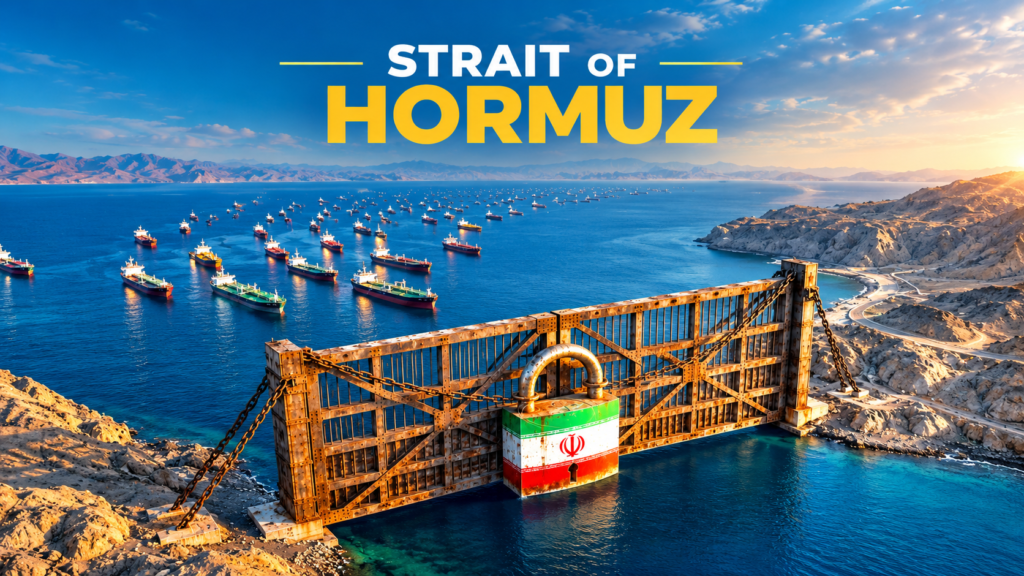
The Strait of Hormuz is one of the world’s most strategically important maritime routes. When security concerns disrupt traffic through the Strait, the consequences extend far beyond ships and shipping companies.
Cargo movements, energy supplies, insurance, freight costs, and global supply chains can all be affected.
A recent Insurance Day analysis by Julien Matar, Head of Marine, Middle East and North Africa at Lockton, examines an important question: what will a genuine return of confidence in the Strait of Hormuz actually look like?
The answer may have less to do with official announcements and more to do with what happens on the water.
Reopening a Route Is Not the Same as Restoring Confidence
A government announcement that conditions have improved does not automatically mean that shipowners, insurers, cargo operators, and risk managers are ready to return to normal operations.
For the insurance and maritime markets, confidence is ultimately demonstrated through actual commercial activity.
Risk managers need practical answers to questions such as
- Can vessels safely make the journey?
- Can the cargo obtain insurance?
- Can vessels be properly crewed?
- Can cargo reach its destination on schedule?
- Can the voyage be completed at a commercially acceptable cost?
These questions determine whether businesses can realistically resume normal operations.
As Insurance Day reports, incident-free voyages, rather than political announcements, will be an important indicator of when confidence returns to the Strait.
Why Does This Matter to Insurance?
Insurance is fundamentally about assessing and pricing risk.
When the perceived risk associated with a shipping route increases, insurers and businesses have to reconsider both the availability and cost of protection.
This is particularly important for marine and war-risk insurance, where changes in the security environment can have a direct impact on underwriting decisions.
The Strait of Hormuz has already demonstrated how quickly geopolitical developments can affect marine insurance.
Earlier in 2026, Insurance Day reported that war-risk premiums for some Hormuz transits had risen into double-digit territory, with some single-voyage cover reportedly exceeding $10 million.
That illustrates an important insurance principle:
When risk changes, the price and availability of insurance can change with it.
Confidence Has to Be Earned
If conditions improve, insurance markets do not necessarily return to previous pricing and coverage levels overnight.
Insurers need evidence.
One safe voyage is encouraging.
Several safe voyages provide more information.
A sustained pattern of safe, incident-free traffic provides stronger evidence that the underlying risk environment may be changing.
This is why the return of confidence is likely to be a process rather than a single event.
The market will be watching what actually happens to vessels, cargoes, crews, and routes over time.
The Supply-Chain Effect
The implications also extend beyond the shipping industry.
The Strait of Hormuz is a critical route for global energy and commodity movements. Disruptions can create knock-on effects for businesses that depend on reliable transportation and predictable logistics.
Higher insurance costs can contribute to higher transportation costs.
Longer routes can increase fuel and freight expenses.
Delays can affect production schedules and delivery commitments.
And uncertainty can make it more difficult for businesses to plan.
This is where insurance becomes part of a much bigger economic picture.
Insurance does not operate in isolation.
Geopolitical risk can influence insurance.
Security concerns can influence insurance.
Shipping disruptions can influence insurance.
And those insurance and logistics effects can eventually reach businesses and consumers.
What Should Businesses Be Watching?
For companies with exposure to marine transportation, the situation around the Strait of Hormuz highlights the importance of active risk management.
Businesses should pay attention not only to whether a route is technically open, but also to:
1. Security conditions
Are vessels actually operating safely and consistently?
2. Insurance availability
Are insurers willing to provide the required protection, and under what conditions?
3. War-risk pricing
How are changing security conditions affecting premiums and deductibles?
4. Shipping capacity
Are vessels and crews available to operate the route?
5. Delivery reliability
Can goods move according to commercially acceptable schedules?
6. Alternative routes
What options exist if the preferred route becomes unavailable again?
These considerations can form part of a broader business continuity and supply-chain risk strategy.
The Bigger Insurance Lesson
The Strait of Hormuz provides a useful real-world example of how interconnected modern risks have become.
A security event can become a shipping problem.
A shipping problem can become an insurance problem.
An insurance problem can become a cost problem.
And a cost problem can eventually become a supply chain and business problem.
For insurers, brokers, shipowners, and businesses, the challenge is therefore not simply to ask whether a route has reopened.
The more important question is
Has the underlying risk changed enough for the market to have confidence in sustained operations?
That confidence will ultimately be built through evidence—including safe voyages, reliable logistics, available insurance capacity, and a sustained improvement in the operating environment.
The Insurance Room Asks
If you were a shipowner, would one peaceful voyage be enough to convince you that the Strait of Hormuz is safe again?
Or would you want to see a longer track record of safe, incident-free voyages before returning to normal operations?
The answer illustrates a fundamental principle of insurance:
Confidence comes from evidence, not assumptions.
The Insurance Room
Making insurance easier to understand—one risk at a time.
Come into The Insurance Room. Let’s talk insurance.